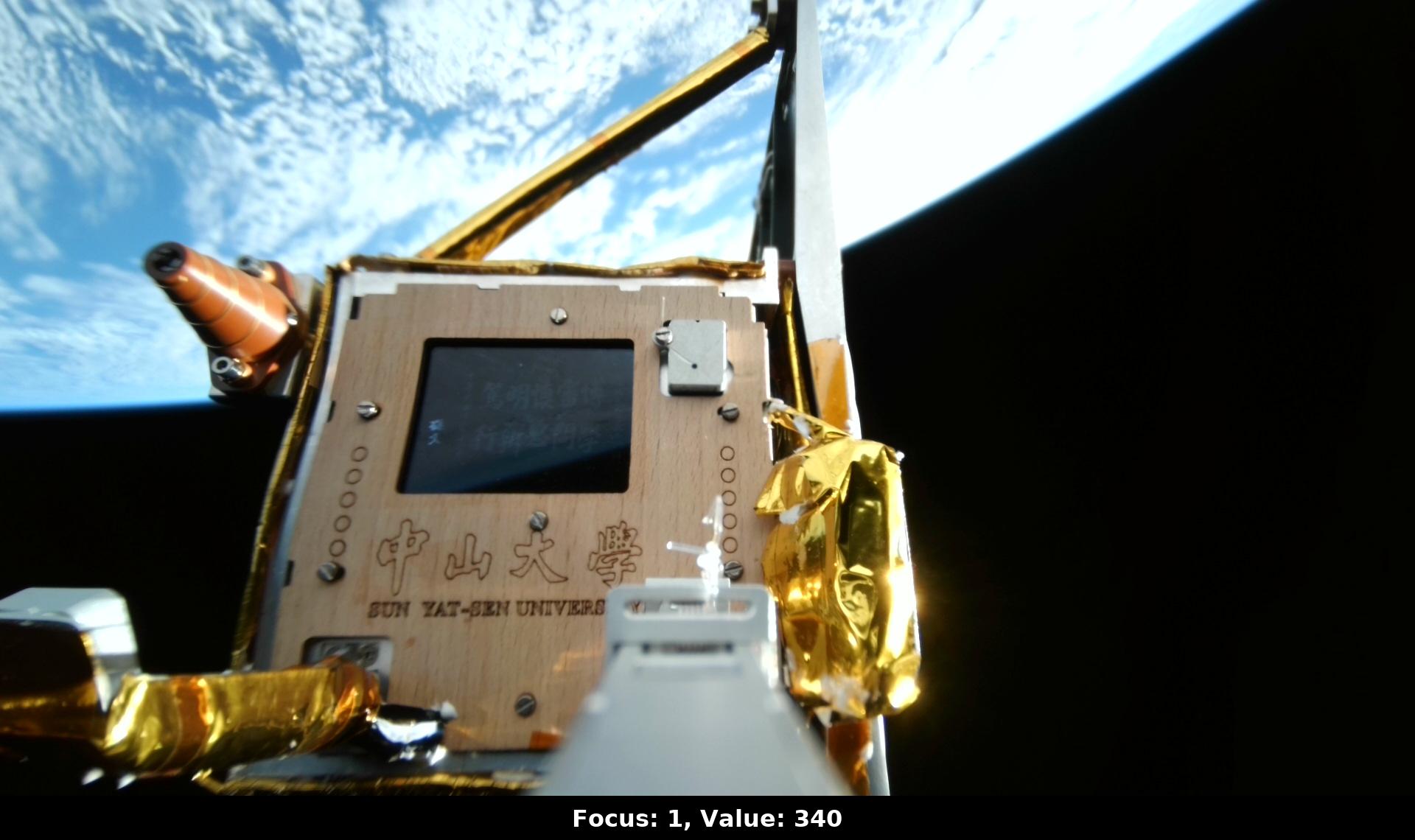
On January 12, Sun Yat-sen University (SYSU), in partnership with a commercial Chinese aerospace enterprise CAS Space, successfully completed a flight test for verifying key technologies of reusable launch vehicles. The test validated an online-trajectory-optimization-based guidance technique under a flight profile with an altitude above 100 kilometers, providing strong support for China's development of reusable launch vehicle technologies.
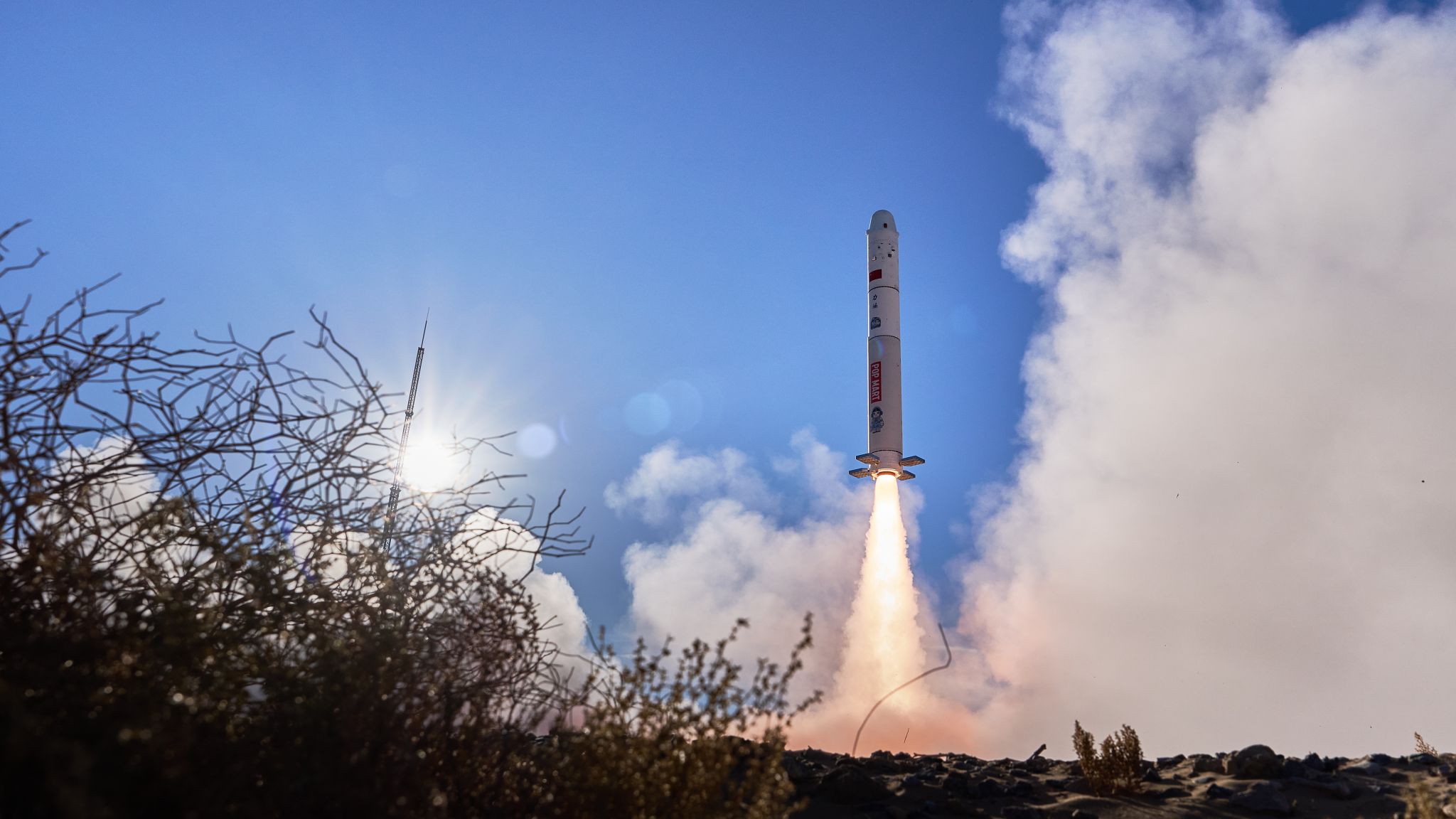
The PH-1 Y1 rocket blasts into the sky at the Jiuquan Satellite Launch Center.
The PH-1 Y1 rocket lifted off as scheduled at 4 pm and reached an altitude of roughly 120 kilometers, passing the Karman line — commonly regarded as the boundary between Earth's atmosphere and outer space — before descending back to Earth. When the vehicle descended to an altitude of 70 kilometers, the onboard guidance computer called "Shen Si-2D" (SS-2D), independently developed by SYSU, executed an online trajectory optimization program for the return phase. Despite complex deviations and environmental disturbances, the system achieved high-precision, fixed-point, and attitude-controlled landing of the booster, marking the test a complete success.
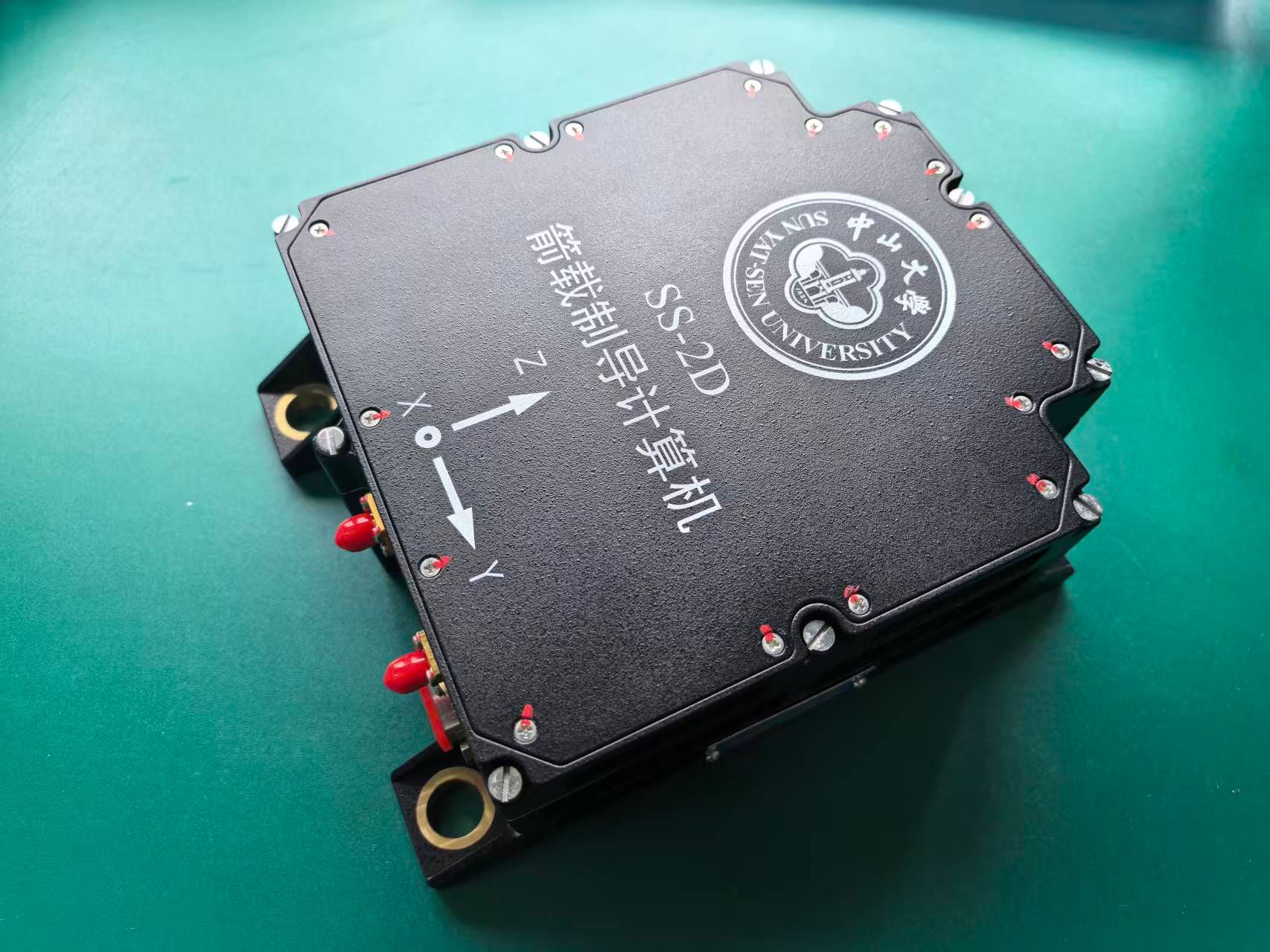
The SYSU-developed "Shensi-2D" (SS-2D) on-board guidance computer.
The return phase of this flight test operated in an unpowered mode, focusing on verifying the engineering feasibility, mission adaptability, and flight reliability of the online trajectory optimization method paired with grid fin aerodynamic control under cross-velocity range and large-airspace reentry conditions. This mission is recognized as China's first closed-loop guidance flight test utilizing online trajectory optimization at a 100-kilometer altitude profile.
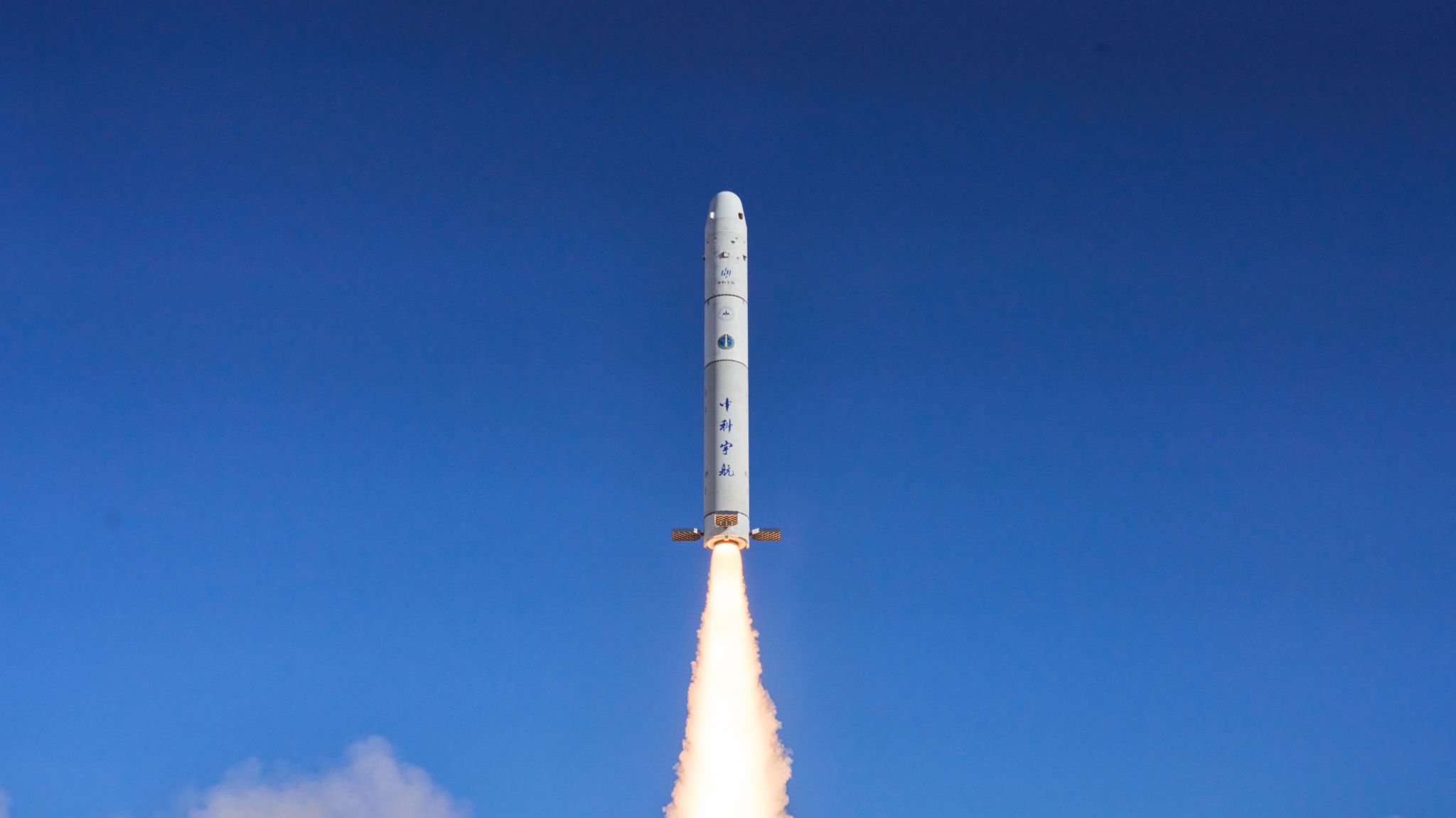
The PH-1 Y1 rocket blasts into the sky at the Jiuquan Satellite Launch Center.
The SS-2D system features 100 percent domestically produced components and integrates proprietary algorithms developed by the university's Research Group of Intelligent Unmanned Aerospace Systems. To address engineering challenges such as the highly nonlinear aerodynamic characteristics during reentry, the coupling between terminal position, attitude, and velocity constraints, and the limited onboard computational resources, the team implemented receding horizon optimization calculations onboard the rocket. Results show that the algorithm meets real-time guidance requirements for high-dynamic flight while maintaining high optimization accuracy. With further adaptation, the technology can be applied to various launch vehicles and experimental launch vehicles, supporting China's push for routine, low-cost space access.

"The complete success of this test is a critical milestone in our exploration of return guidance technology for reusable launch vehicles and a landmark achievement resulting from our team's diligent research and strong collaboration," said Professor Hongbo Chen, head of the Research Group of Intelligent Unmanned Aerospace Systems. "At the same time, we recognize clearly that the flight profile and propulsion scheme of this test still do not fully verify all key guidance technologies required for the complete return process. We must continue to push forward to catch up with world-class standards. In our future work, we will further innovate the integration of university-enterprise research and organized research within academia, striving to contribute to China's space efforts and the development of emerging productive forces."
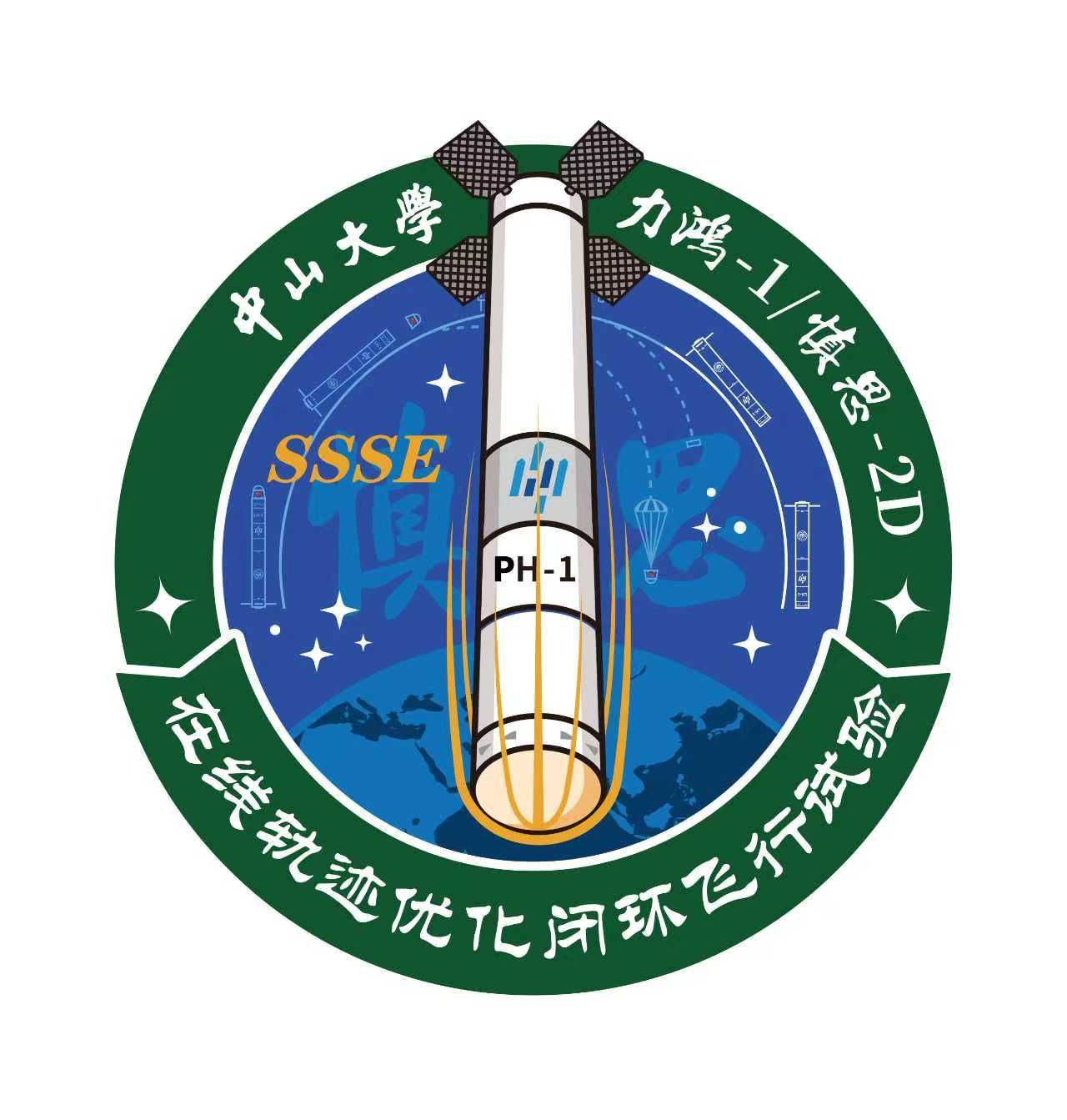
The "Shensi-2D" Mission Patch
The SS-2D takes its name from the SYSU motto, which encourages "careful reflection" (慎思). The "D" signifies the system's reliance on domestic Digital Signal Processors (DSP). The system is the product of a collaborative, organized research effort by the university's faculty and students. In the project, many Sun Yat-sen University students were appointed as system engineers and carried out algorithm development, rocket integration, and testing work. The student team focused deeply on core areas such as aerospace trajectory optimization, computational guidance methods, onboard embedded systems, and system simulation. They wrote tens of thousands of lines of algorithm code and completed dozens of system-level ground test validations, ultimately achieving a successful flight test.
Source: SYSU Global Communication Office, School of Systems Science and Engineering




 COPYRIGHT©1999-2017 , SUN YAT-SEN UNIVERSITY