Zhongshan Ophthalmic Center (ZOC), Sun Yat-sen University (SYSU) shared its experience in expanding eye care services and monitoring effective refractive error coverage (eREC) at a meeting of the World Health Organization (WHO) SPECS 2030 initiative held from September 2 to 3, 2026.
Held at WHO headquarters in Geneva in a hybrid format, the meeting brought together representatives from WHO country offices and members of the Global SPECS Network to review progress in implementing the initiative and discuss priorities for the next stage. Prof. Lin Haotian, President of ZOC and Director of the hospital, joined the meeting via pre-recorded video and presented ZOC’s experience in China.
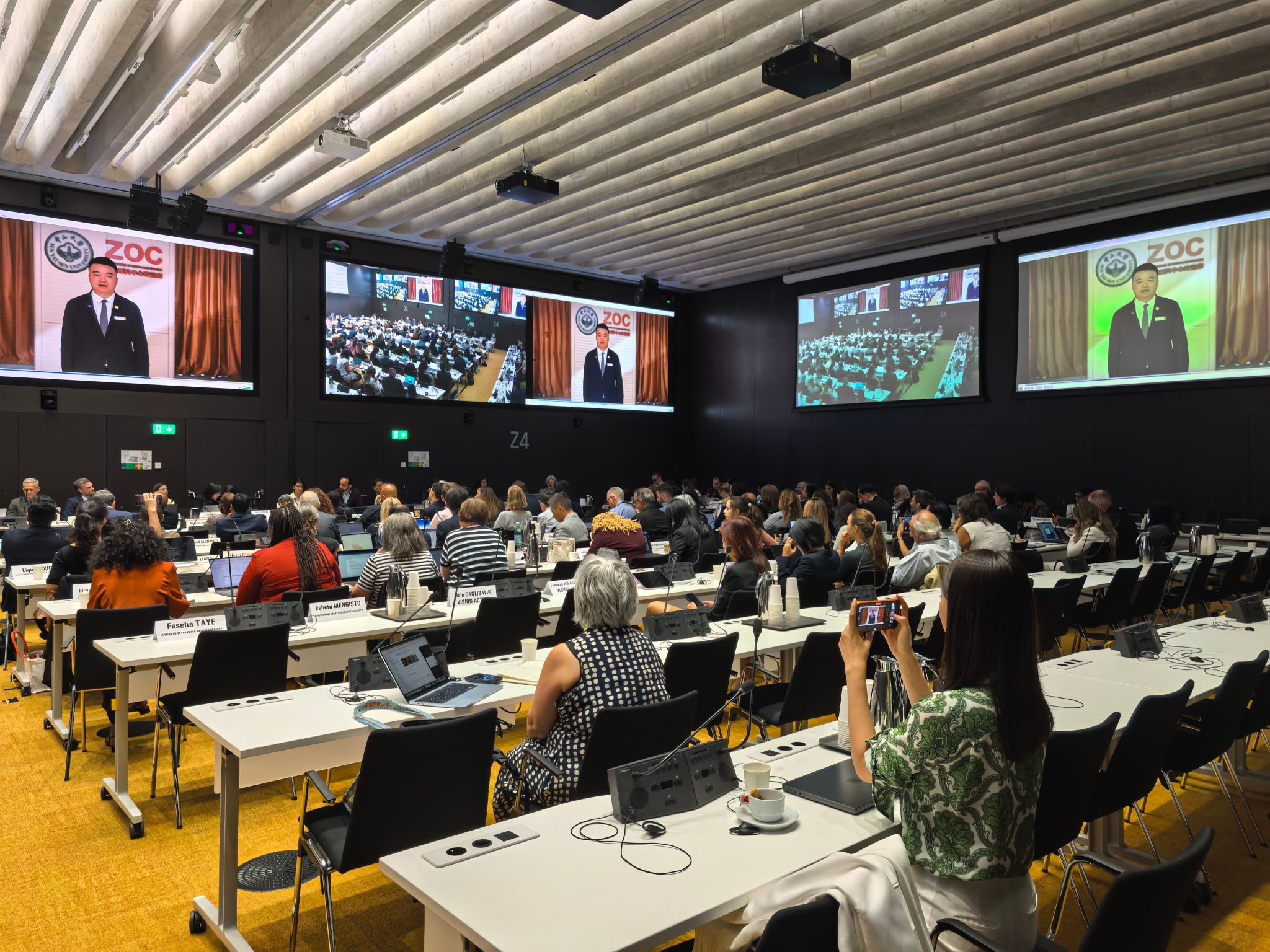
President Lin introduced ZOC’s approach to expanding eye health services across different geographic areas and settings, with a focus on bringing high-quality eye care services to underserved communities and integrating eye health into primary public health services.
He also highlighted ZOC’s work on monitoring eREC. In 2025, ZOC incorporated eREC assessment into school-based eye screening in Xinxing County, Guangdong Province, reaching more than 60,000 children. The experience showed that eREC monitoring could be incorporated into county-level school screening in a practical and cost-effective way.
ZOC's work was also highlighted by WHO officials during a session showcasing examples of myopia prevention and control. ZOC’s engagement in the MyopiaEd Initiative and its eREC monitoring work in Xinxing were presented as examples with potential for wider application.

Launched by WHO in 2024, the SPECS 2030 initiative is a global effort to expand access to refractive error services and support countries in achieving the global target of a 40-percentage-point increase in eREC by 2030. The initiative is built around five strategic pillars: Services, Personnel, Education, Cost and Surveillance.
ZOC has been engaged in the development of the WHO SPECS 2030 initiative since its early stages in 2023, and in January 2024, it was formally recognized by WHO as a member of the Global SPECS Network.
The collaboration between ZOC and WHO has spanned decades. As a WHO Collaborating Centre for Eye Care and Vision, ZOC supports WHO initiatives in areas including myopia education and prevention, people-centred eye care, and the pilot of methodologies for collecting data on global eye care indicators.
The meeting provided an opportunity for ZOC to exchange practices with WHO and other members of the Global SPECS Network and to contribute experience from China to international efforts to improve access to quality eye care.





 COPYRIGHT©1999-2017 , SUN YAT-SEN UNIVERSITY