Beyond the spotlight of the competitions and volunteer service, SYSU research teams also played a vital role at the 15th National Games. Providing the crucial technological backbone for hosting a "Green Games," research teams from SYSU operated behind the scenes, leveraging their expertise in intelligent sensing and atmospheric sciences to ensure exceptional air quality throughout the event.
Intelligent Sensors: "Digital Guardians" on the Roads
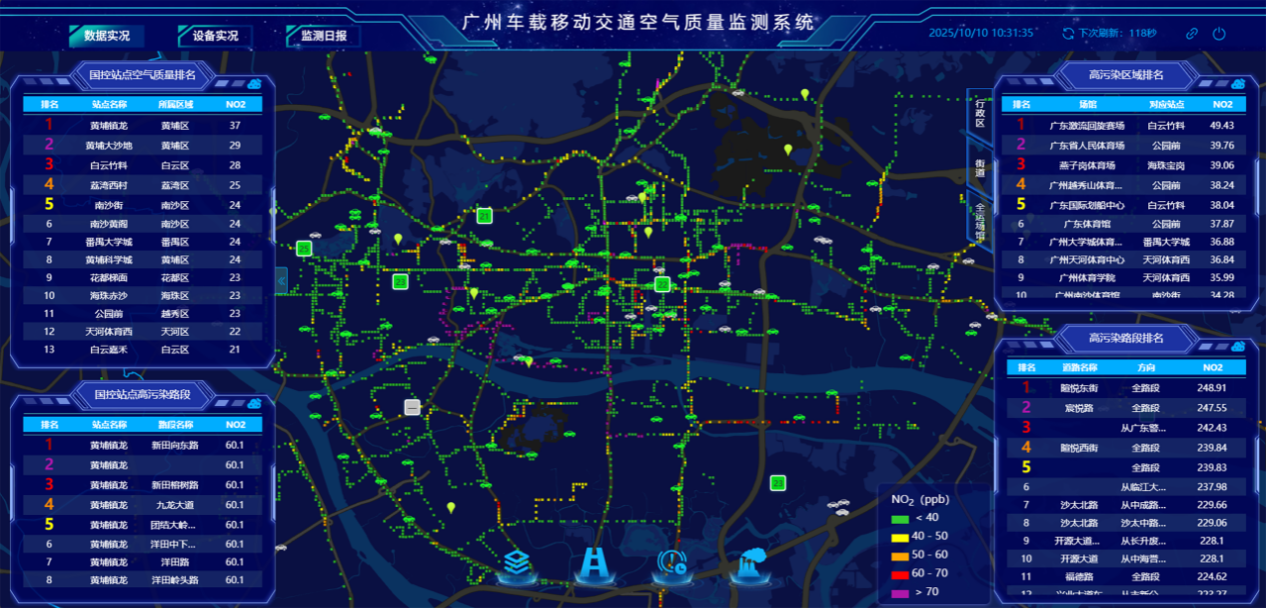
During the Games, staff upgraded about 320 city taxis with small roof-mounted air sensors. Developed by Prof. Yonghong Liu's team at SYSU's School of Intelligent Systems Engineering, these devices turned ordinary cabs into mobile "air scanners" that continuously captured pollution data as the vehicles traversed the city. Prof. Liu notes that each on-board sensor draws in air through a tiny tube and achieves minute-by-minute monitoring of pollutants such as PM2.5, sending the data in real time to a cloud platform.

The intelligent sensors are installed on taxis.
In effect, this network of sensor-equipped taxis wove a dynamic pollution-monitoring grid across Guangzhou, supplying robust real-time data to city authorities. By enabling minute-level roadside air-quality tracking, the system helped the city meet its strict air standards during the Games.
Atmospheric Scientists: Precision Forecasting & Risk Mitigation
Meanwhile, a second SYSU team led by Prof. Shaojia Fan and Assoc. Prof. Yiming Liu from the School of Atmospheric Sciences provided crucial scientific support for air quality management.

Professor Shaojia Fan (third from the left).
Well before the Games began, this team systematically analyzed decades of local weather and pollution data to identify eight common meteorological scenarios, and it devised tailored air-quality response plans for each. Starting 19 days before the Nov. 9 opening ceremony, they submitted daily weather and pollution forecasts to authorities. Their efforts proved highly effective: on the day of the opening ceremony, Guangzhou reported an average PM2.5 level of just 15 micrograms per cubic meter, achieving an "excellent" air quality rating.
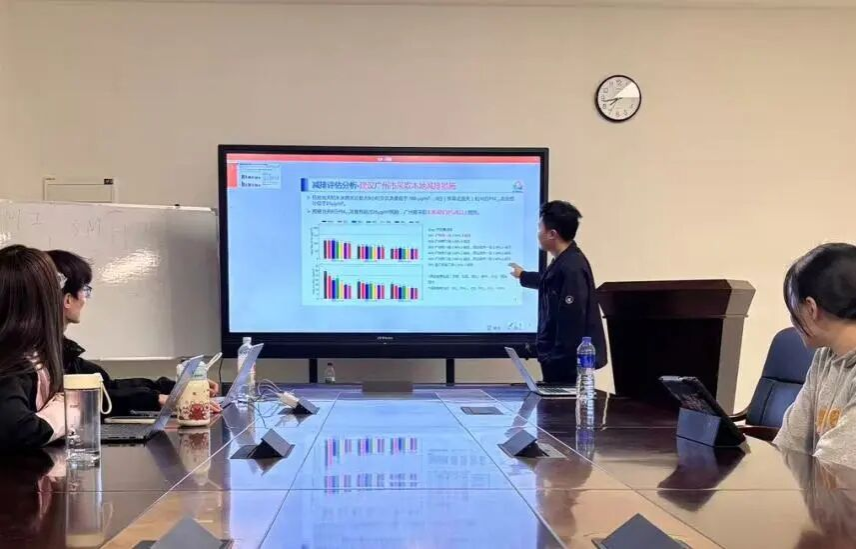
Associate Professor Yiming Liu analyzes meteorological conditions with his research team.
Thanks to these invisible guardians of technology, the 15th National Games achieved not just sporting success but a victory for environmental sustainability. By seamlessly integrating state-of-the-art sensing with advanced atmospheric modeling, SYSU demonstrated how scientific expertise can yield tangible benefits — crystal-clear skies and clean air — during a major public event. Their dedication underscores SYSU's role as an indispensable partner in China's effort to host world-class, green sporting events.